ERC Group
Leadership

The people accountable for delivery

National health programmes are long commitments. These are the people who own them.

01

Executive team

A company that exports health infrastructure rather than importing it — and the two people who decided it would.

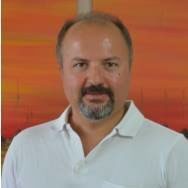
Andonis Filippidis

Chief Executive Officer

Andonis works at the level where health policy, economics and system architecture meet. He treats a national programme as a whole — the regulatory obligations it has to satisfy, the funding model that has to sustain it, the data a health system will need a decade from now — and describes his own discipline as the design of healthcare business models rather than of software. That perspective is what allows a system to still fit its country five years after go-live.

  • Frames a national programme in full — regulatory, economic and architectural — not as a software deliverable alone
  • Works with health ministries, regulators and public and private providers across Türkiye, the Middle East and the Balkans
  • Took a Turkish company into the Middle East and the Balkans — health IT exported rather than licensed in
  • First versions of Türkiye's USBS and MHRS: the national systems the country still runs on today
  • Read a Ministry of Health case-mix request as a market: costing and DRG tariffs are a problem every health ministry eventually faces, so ERC built a product rather than a single delivery
  • Council of Experts, Asklepieia Health Cluster; Turkish Informatics Society, Turkish Medical Informatics Association and HL7 Turkey
  • Industrial Engineering with economics and computer science, Karlsruhe Institute of Technology
LinkedIn profile

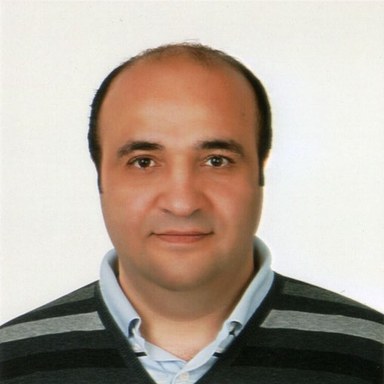
Nurali Ünal

Vice President and Chief Technology Officer

Nurali has spent his entire career in one domain. He began writing hospital software inside a hospital in 1996 and has been building it ever since; today he conceives the architecture of ERC's national-scale implementations as well as owning everything the company builds — the platform, the engineering and research teams, and the operations that keep national systems alive long after go-live. AviCenna's design comes from someone who has kept clinical systems running through night shifts, data migrations and ministry deadlines, not from someone applying general patterns to healthcare.

  • Conceives the architecture of national-scale implementations — how a country's hospitals, laboratories and registries connect to one another
  • Three decades in healthcare IT, beginning as a developer inside Başkent University Hospital in 1996
  • Owns AviCenna's architecture — multi-tenant and highly available, designed for systems that cannot be taken offline to be fixed
  • Co-built Türkiye's national DRG cost model: clinical and financial data gathered from 88 hospitals, and the cost calculation derived from it
  • More than 25 R&D programmes and 50 projects delivered, five of them international, including the LifeWatch national cardiac telemetry platform
  • Kosovo's national system; Al-Makassed and Caritas Baby Hospital in Jerusalem; the emergency system for the Ministry of Health, Saudi Arabia
  • Hospital groups he brought live in 1999 are still running today
LinkedIn profile

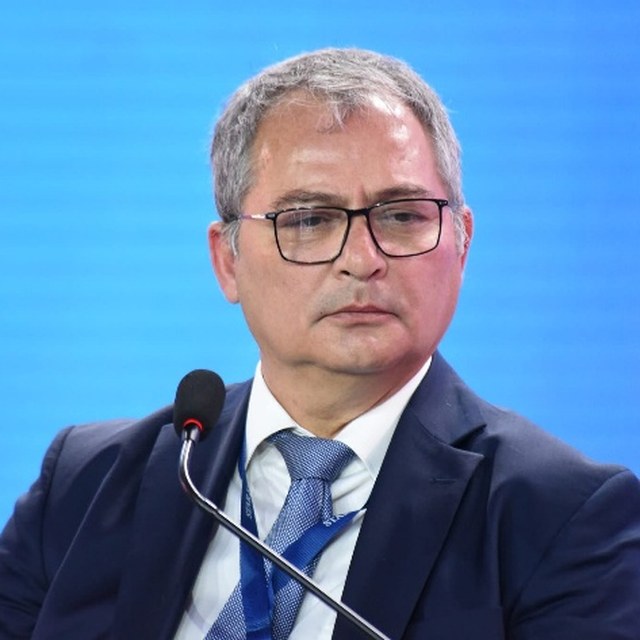
Özden Güven

International Project Management

Özden is responsible for project delivery outside Türkiye. Twenty-one years at ERC, and the work has followed the company abroad: the national health information system for Kosovo’s Ministry of Health, the hospital system at Al-Makassed in Jerusalem, the Royal Commission Medical Center in Saudi Arabia, and ERC’s delivery role in the ProEmpower pre-commercial procurement consortium. Bringing a hospital system live in another country is only partly a technical problem — it is a problem of ministries, procurement rules, local clinical practice, and people who have to keep working while the system changes underneath them. That is the part he owns.

  • Responsible for international project delivery: Kosovo’s Ministry of Health, Al-Makassed Jerusalem, Royal Commission Medical Center in Saudi Arabia
  • Project Management Professional (PMP), certified by the Project Management Institute
  • Twenty-one years with the company
  • ERC’s delivery role in the ProEmpower pre-commercial procurement consortium, since 2018
  • Business intelligence and data warehousing — dimensional modelling, ETL and dashboard design
  • Oracle, DB2 and SQL Server, applied to hospital-group reporting at scale
  • Nationwide Turkish programme delivery, and long-running university hospital accounts including Uludağ
  • Earlier public-sector delivery for the Ministries of Agriculture, Industry and Finance, and the State Statistical Institute
  • B.Sc. in Computer Science and Engineering, Hacettepe University

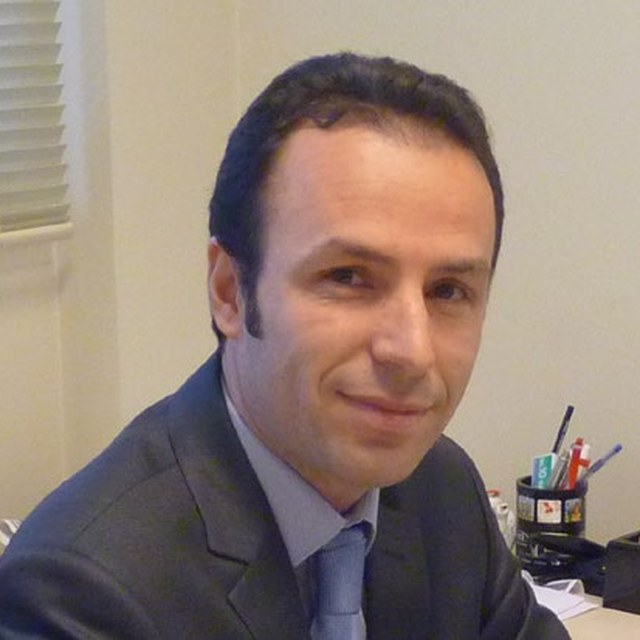
Uğur Esmer

Director of Software Development

Uğur runs the engineering teams that build what ERC sells. More than thirty projects across his career, six of them international, and over forty engineers managed — currently a team of ten delivering against live national deployments. He is an IHE integration specialist, which matters more than it sounds: the difference between software that works in a demonstration and software that survives contact with a hospital’s existing systems is almost always the integration layer, and that is where he has spent his career.

  • Leads the software development teams delivering AviCenna and the clinical product line
  • IHE integration specialist, covering Cross-Enterprise Document Sharing, ATNA and Consistent Time
  • More than thirty projects initiated, planned and deployed; six international, ten and more national
  • Service architecture: SOA and REST, microservices, Docker and containerisation
  • Java, relational and NoSQL data stores, cloud, and modern web, desktop and mobile
  • Twenty-one years with the company
  • Delivery across Kosovo, Jerusalem, Saudi Arabia and the EU consortium programmes
  • M.Sc. in Civil Engineering, Middle East Technical University
02

Governance

How decisions and accountability are structured behind the individual roles.

  • Programme accountability

    Every national deployment has a named programme director accountable to the contracting ministry for scope, schedule and service levels.

  • Technical authority

    Architecture and release decisions sit with a defined technical authority rather than being distributed across project teams, so platform coherence survives parallel deployments.

  • Information security governance

    Security responsibilities are assigned under the ISO 27001 management system, with defined escalation for incidents affecting patient data.

Want to talk to someone directly?

Tell us what programme you are planning and we will connect you with the person who owns that area.